‘Behind Five Willows’: A Review
Novel reading is a dangerous business.

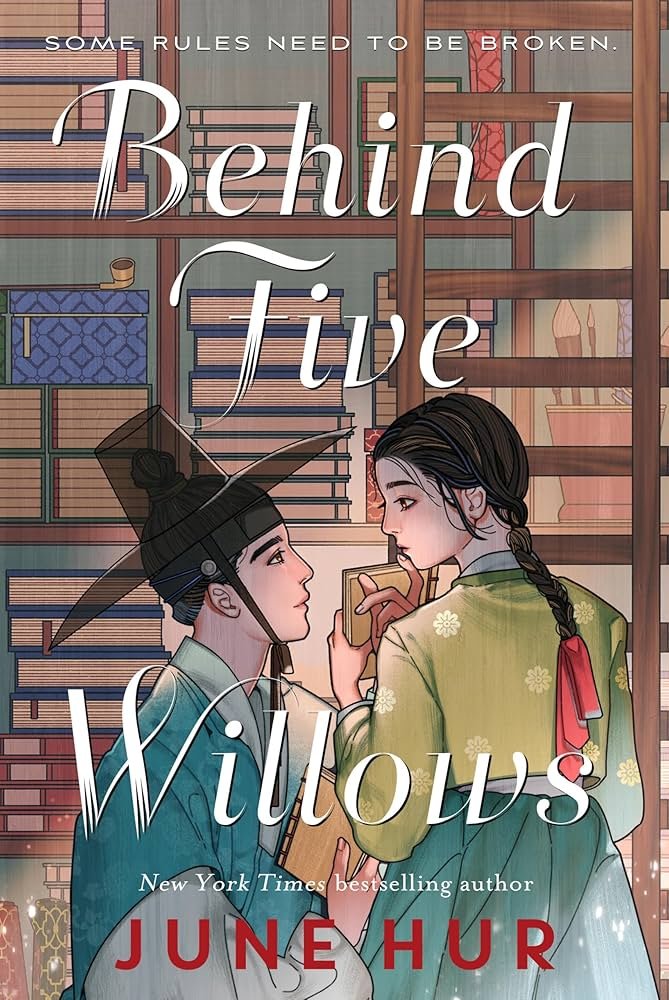
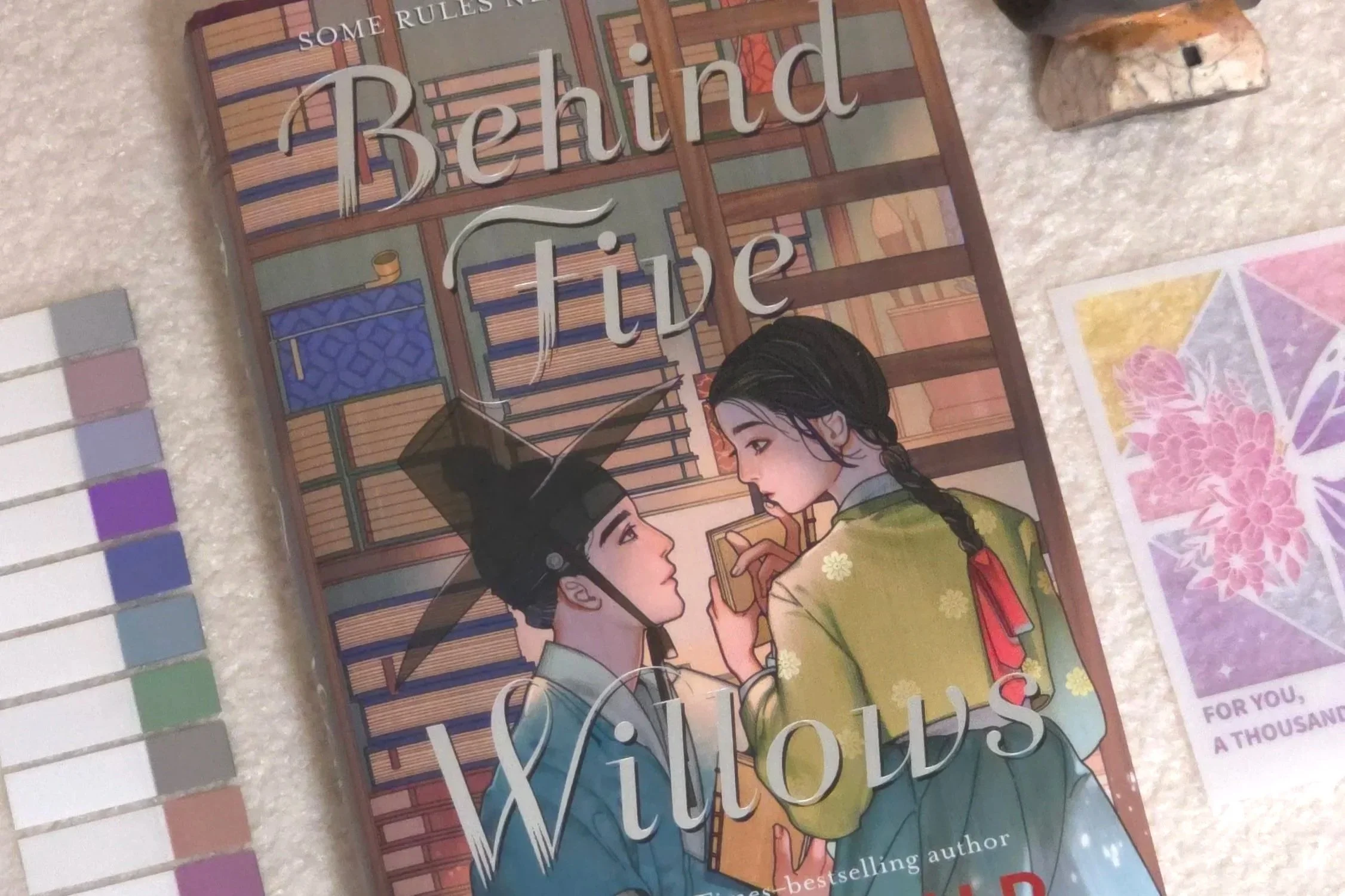
Set in historical Korea and inspired by the literary classic ‘Pride and Prejudice’, an illegal book transcriber and a secret writer develop an unlikely romance while fighting against government book banning.
Being a book transcriber during a time of rampant government censorship and book banning is dangerous work, but Haewon would have it no other way. Books are where she finds freedom from the familial and societal expectations thrust upon her—especially when transcribing the work of her favourite author, Black Lotus.
“Am I committing a moral transgression? Ought I to stop? I have no answers, but I promise you this: If ever you are discovered, if the world turns against you, write to me at once. You will never be friendless. You will never be entirely alone.” - Black Lotus (p. 78)
As the only son of a noble, Seojun is overwhelmed by the weight of duty and responsibility. His sole joy is writing fiction, a scandalous hobby he must pursue in secret. Between the pressure that comes with his status and government officials actively persecuting authors, Seojun’s only solace lies in the encouraging letters from his anonymous transcriber, Magpie.
“A person is a person, just as a flower is a flower. Scholars rank one another, people and flowers, prizing the plum blossom over the common wildflowers, but to me, I love all flowers. They all bring delight. They are all beautiful.” - Magpie (p. 169)
When Haewon and Seojun meet, they instantly clash. But as they spend more time together, they begin to realize their lives are far more dangerously intertwined than they could ever have imagined..
“This gentleman does not know where his people have come from / Also doesn’t know his family’s name / At the side of his house grows five willow trees / This is how he got this name.”
Reading is political. It always has been.
Books have the potential to change the world—I mean, just look at the Holy Bible and the Quran! There is always an overarching point or message addressed in books, whether explicitly written or not. And the text will always be influenced by the author’s perspective and knowledge in some way. As Seojun’s father said, “Fiction is a clever thing.. a writer can hide anti-state sentiments inside their words” (p. 214). As author June Hur prefaces, there was a widespread fear that anti-state and anti-Confucian ideas could be hidden within novels. This notion is why King Jeongjo issued a policy, Munchebanjeong (문체반정), that resulted in the banning of fictional writings and its creation, along with strict and extensive censorship of the writings of Joseon scholars.
This wasn’t what I’d expected; it was more.
Behind Five Willows is more than just a historical romance novel. There isn’t a lot of action (it focuses more on the relationships between the main characters as well as between the three sisters), but is embedded with the very same controversial and polarizing themes that King Jeongjo would not tolerate: commentary on familial duty and societal expectations—especially of women—and breaking free from them to pursue personal desires; and grappling with the introduction of Western ideals/values in a highly Confucian society, among other themes. The exploration of these themes along with Hur’s lyrical writing create an enticing story that not only gives readers a glimpse into what life was like in historical Korea, but also reminds us of the power of the written word.
“I often wonder at how something as simple as paper can carry one’s heart and mind in the form of a letter or a story, across land and water, right into the hands of the receiver.”
The letters between Magpie and Black Lotus contain so much wisdom.
The only time Haewon and Seojun can be honest about their thoughts and feelings without fear of judgement is with each other, through their letters. I really enjoyed Hur’s writing style and the language she used for this book and the letters; it felt very appropriate for the time period, something more formal with a quality that almost feels floral. Here is a selection of my favourite quotes from the book:
“Life may feel tangled and impossible to grasp, but also life is very simple… We flourish, and then the wind blows and we are gone, and its place remembers it no more. When I am gone, the world will remember me no more. But I am not afraid. Life is fleeting and therefore how precious…” - Letter from Black Lotus to Magpie (p. 115)
“To bear fate,” she said contemplatively. “I by far prefer the notion of destiny, for I am going to choose mine.” - Haewon (p. 133)
“The night will feel long, should what you fear occur,” he finally wrote, “but it will not be endless. All darkness has its end.” - Letter from Black Lotus to Magpie (p. 237)
“My thoughts are… Novels move us in a way that Confucian classics cannot. The classics dictate how we ought to think. But novels speak to a longing that we are ashamed to admit.” - Seojun (p. 255)
“But I should hope novel readers are slightly kinder, wiser, and more empathetic. We have lived ten thousand lives through books, have endured ten thousand heartaches and joys. As I always say, I think those who do not read novels are the most miserable sort of human beings.” - Haewon (p. 271-272)
“But what is life without its little misadventures?” - Haewon (p. 291)
“I would much rather never call you mine, and live a life without you wandering without a home forever, than to bind you to a life you were not meant for. You are, and will always be, the mistress of your own life.” - Seojun (p. 306)
“She found herself wishing, as she watched a lone bird glide through the azure blue, that she too could sprout wings. To glide above all her worries, over the walls and the mountains of societal rules and customs, to simply follow where the wind took her. For now, she realized, she had words, and words could fly. Words were meant to soar, to rise from the heart as the truest and most earnest expression of her deepest thoughts. Words were meant to be carried from one soul and shared.”
Final Thoughts
Reading Pride and Prejudice at thirteen sparked Hur’s love of writing and storytelling. In a way, this book is an ode to her beginnings, a love letter to the novel that inspired her career as an author. Do you have to have read (or watched) Pride and Prejudice to experience Behind Five Willows to its fullest? Absolutely not! I am in the group of people who have not yet made their acquaintance with Elizabeth Bennet and Mr. Darcy, and I still have zero idea what the classic novel is about. Yet I enjoyed the story of Haewon and Seojun all the same. Perhaps Austen fans could have recognized some similarities and easter eggs that I would not have. Maybe this is my sign to finally read it.. but I digress.
P.S. I will be meeting June Hur next week at a book signing and discussion event about Behind Five Willows. More on that in a future blog post 😉