‘Inheritance’: A Review
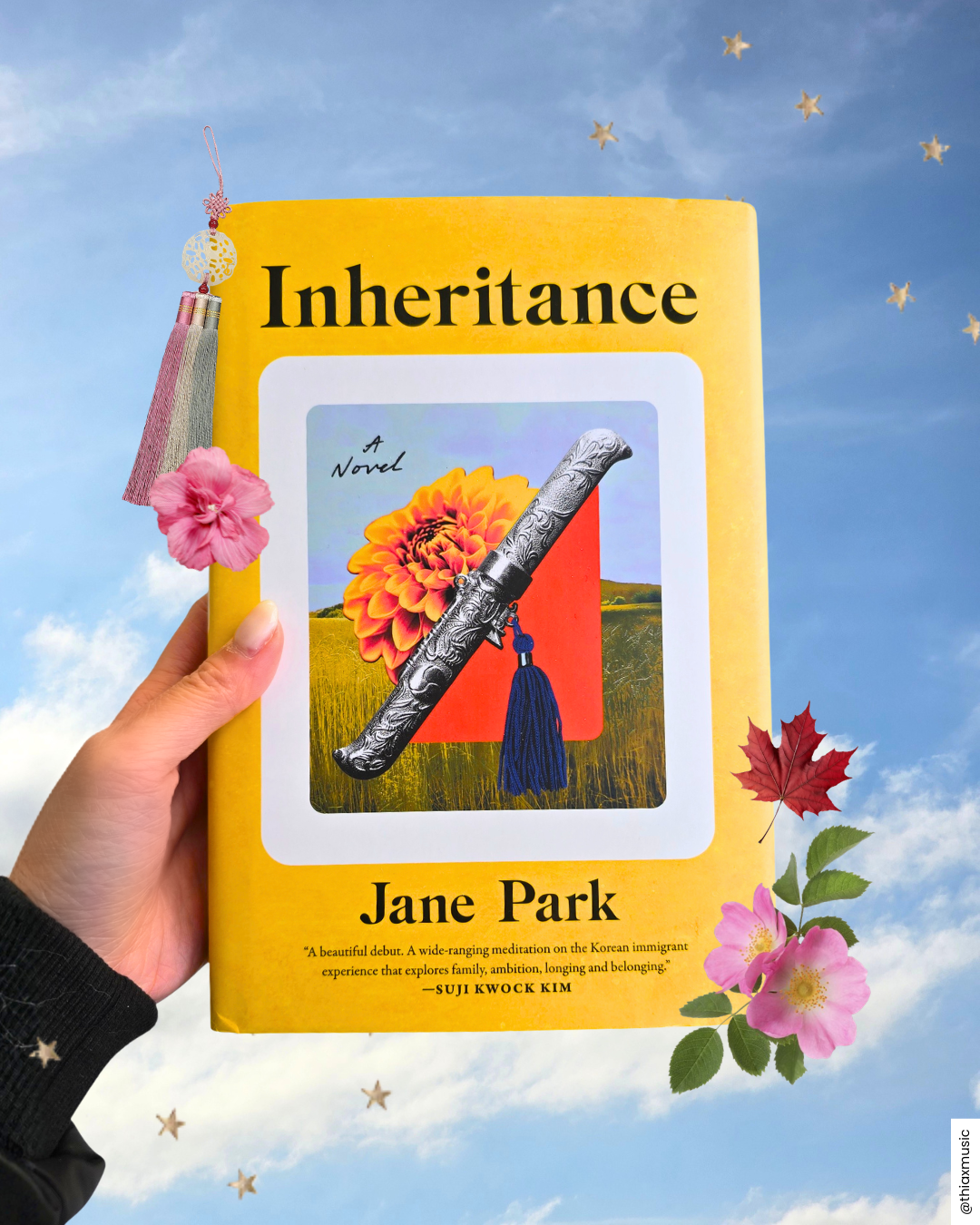
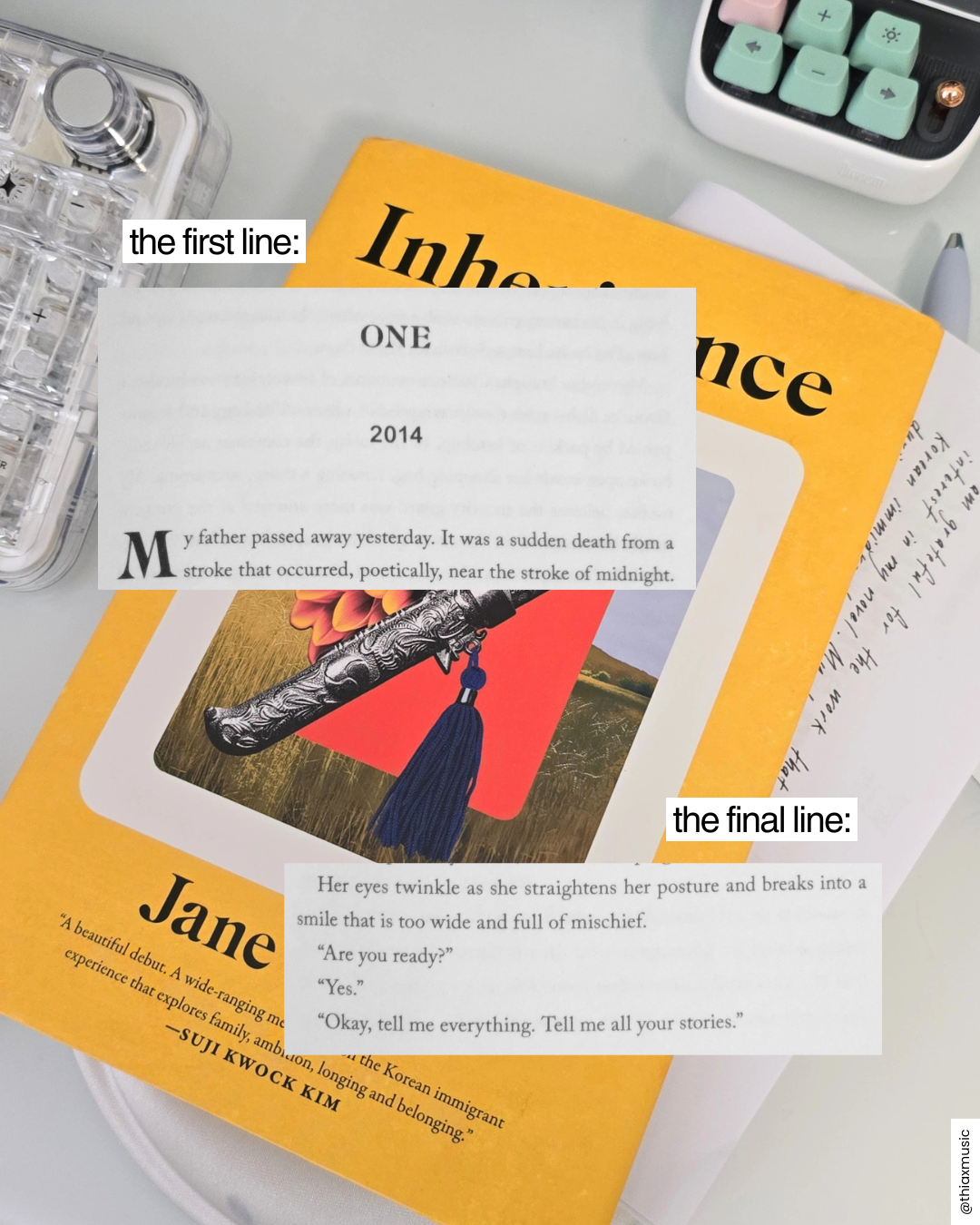
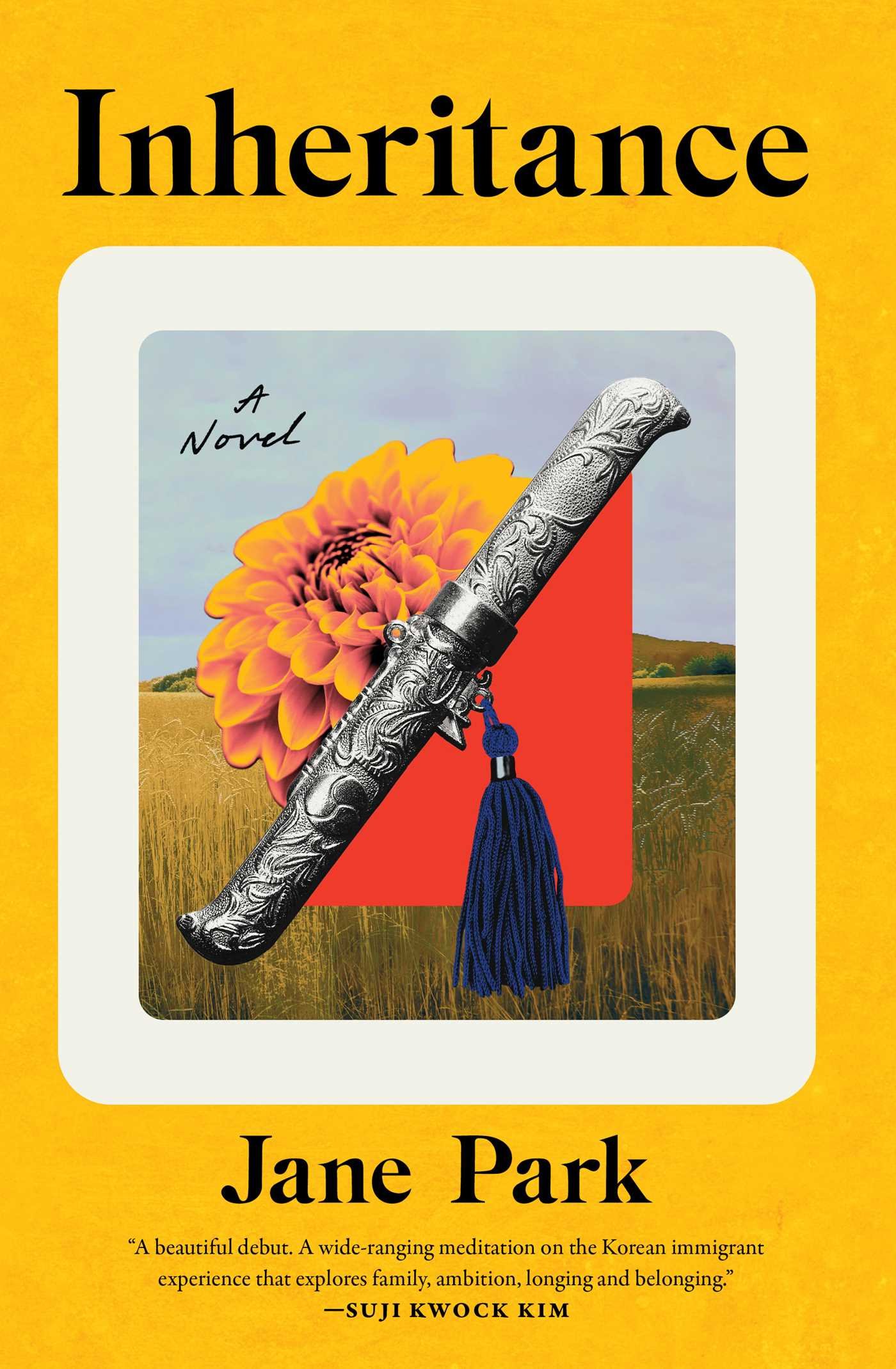
A Korean Canadian woman returns to the prairies, where she revisits her childhood and confronts her haunting guilt, in this debut novel by a brilliant new talent.
Anne Kim is a New York lawyer whose success is built on forgetting the past. When her father dies and she returns to Edmonton for the funeral, she is shocked to discover that he was from North Korea and that he left his brother behind.
As Anne reads the undelivered letters her father wrote to his brother about life in Canada, she is transported back to her childhood during the 1980s and 90s. She recalls the struggles her parents faced as immigrants who ran a grocery store in a rural prairie town. Anne and her brother, Charles, felt the weight of their father’s expectations: whereas Anne was driven to excel and became an overachiever, Charles rebelled, determined to pursue his own dreams. His rebellion created a rift that culminated in a devastating act, irrevocably shattering the family and leaving Anne overwhelmed by inescapable guilt.
Inheritance explores the immigrant experience, the sacrifices made by both parents and children, and the way trauma is transferred to the next generation. As Anne completes her journey to the past, she emerges to finally define life on her own terms.
What you can expect:
✈️ Immigrant story
🏡 Familial relationships
🧑🧑🧒🧒 Generational trauma
⏳️ Dual timelines
💖 Self-identity & discovery
I am a Canadian daughter of East Asian immigrant parents. Although I rarely read literary fiction, this story caught my attention because it really speaks to the generational trauma and racial discrimination that the Asian-Canadian community has faced and still faces, as well as navigating growing up in two very different cultures—the collectivist & Confucian traditions from the East vs. the individualistic, autonomous mindset of the West—and how this duality shapes us and our unique experiences.
What I particularly appreciated about this read was that it shared the different perspectives of both the immigrant parents and their children, and how this affected not only their relationships with each other and the world around them, but also their relationships with themselves. It’s the story of one family’s decades-long journey to making peace with their lives.
There’s a scene where Charles calls Anne a “banana”—yellow on the outside, white on the inside. Anne never felt offended by the term, but rather saw it as a compliment and affirmation that she had assimilated into the Western culture. At one point in my life, I was like Anne where I wanted to hide parts of my “Asianness” to fit in and become more popular (or at least more liked) among people at my school. Although a small part of me still wanted to be in tune with my culture, a large part didn’t want to appear too “fobby”. I forced myself to listen to the popular songs at the time even if I didn’t always like them, just to be able to sing along to them during school dances. I hid my Taiwanese—and later K-pop—boy group fandoms while girls my age were obsessing over Justin Bieber, The Jonas Brothers and One Direction (I have nothing against them, I just preferred something different).
The feeling that I had to be perfect and overachieve because that was the entirety of my self-worth and self-identity; comments directed toward me and my friends that could well be interpreted as micro-aggressions; constantly being torn between being the obedient, filial daughter vs. being true to myself, finding my own way and seeking my independence.. these are just some ways that growing up in two differing cultures took a toll on me in my youth. But I was lucky to have a group of friends who embraced their Asianness and gave me a safe, non-judgmental space to share my love for Asian media and to acknowledge the feelings that I never got to share with my parents. Anne never had that support, and I wonder how different her life would have been if she had such a group of friends.
Evidently, Inheritance brought me back to my own history, just how Anne’s father’s unsent letters brought her back to hers. Thank you to the author Jane Park, the publisher Pegasus Books, and Colored Pages Book Tour for the opportunity to read and review this story written for second-generation immigrant children like myself.
A Letter from the Author
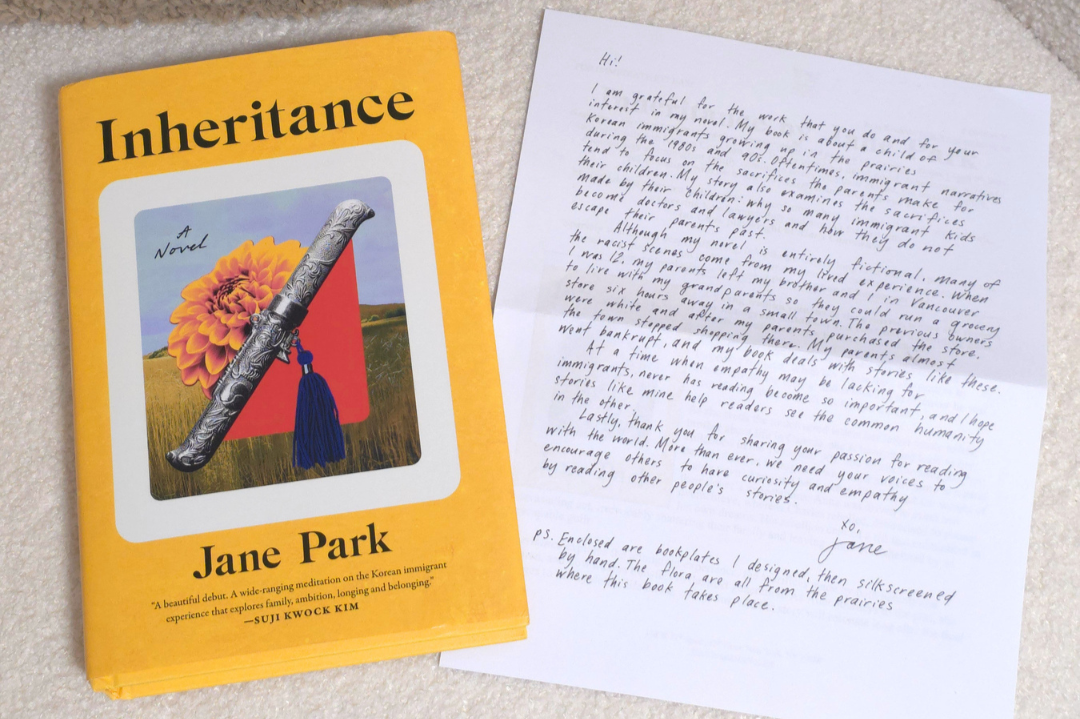
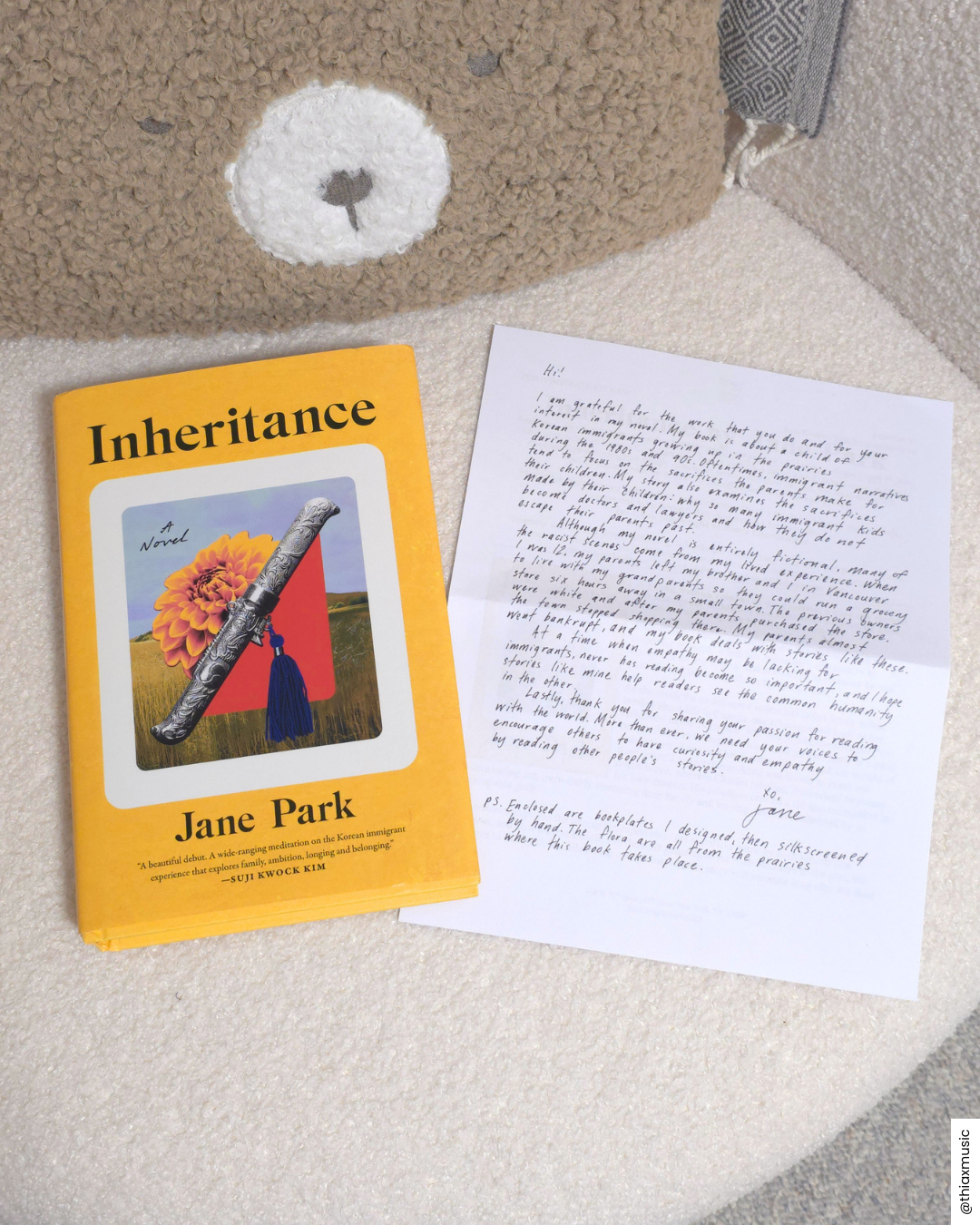
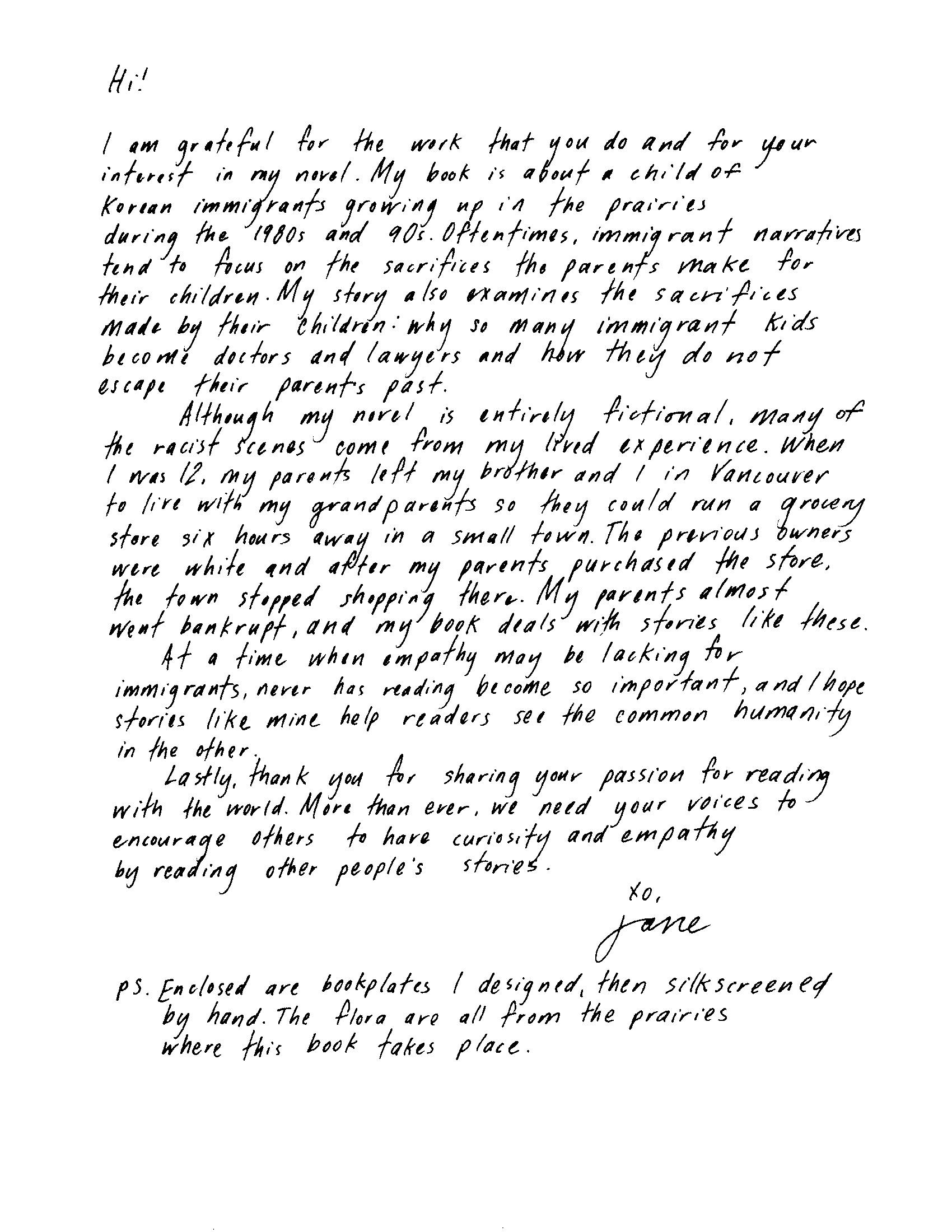
Hi!
I am grateful for the work that you do and for your interest in my novel. My book is about a child of Korean immigrants growing up in the prairies during the 1980s and 90s. Oftentimes, immigrant narratives tend to focus on the sacrifices the parents make for their children. My story also examines the sacrifices made by their children: why so many immigrant kids become doctors and lawyers and how they do not escape their parent’s past.
Although my novel is entirely fictional, many of the racist scenes come from my lived experience. When I was 12, my parents left my brother and I in Vancouver to live with my grandparents so they could run a grocery store six hours away in a small town. The previous owners were white and after my parents purchased the store, the town stopped shopping there. My parents almost went bankrupt, and my book deals with stories like these.
At a time when empathy may be lacking for immigrants, never has reading become so important, and I hope stories like mine help readers see the common humanity in the other.
Lastly, thank you for sharing your passion for reading with the world. More than ever, we need your voices to encourage others to have curiosity and empathy by reading other people’s stories.
XO, Jane
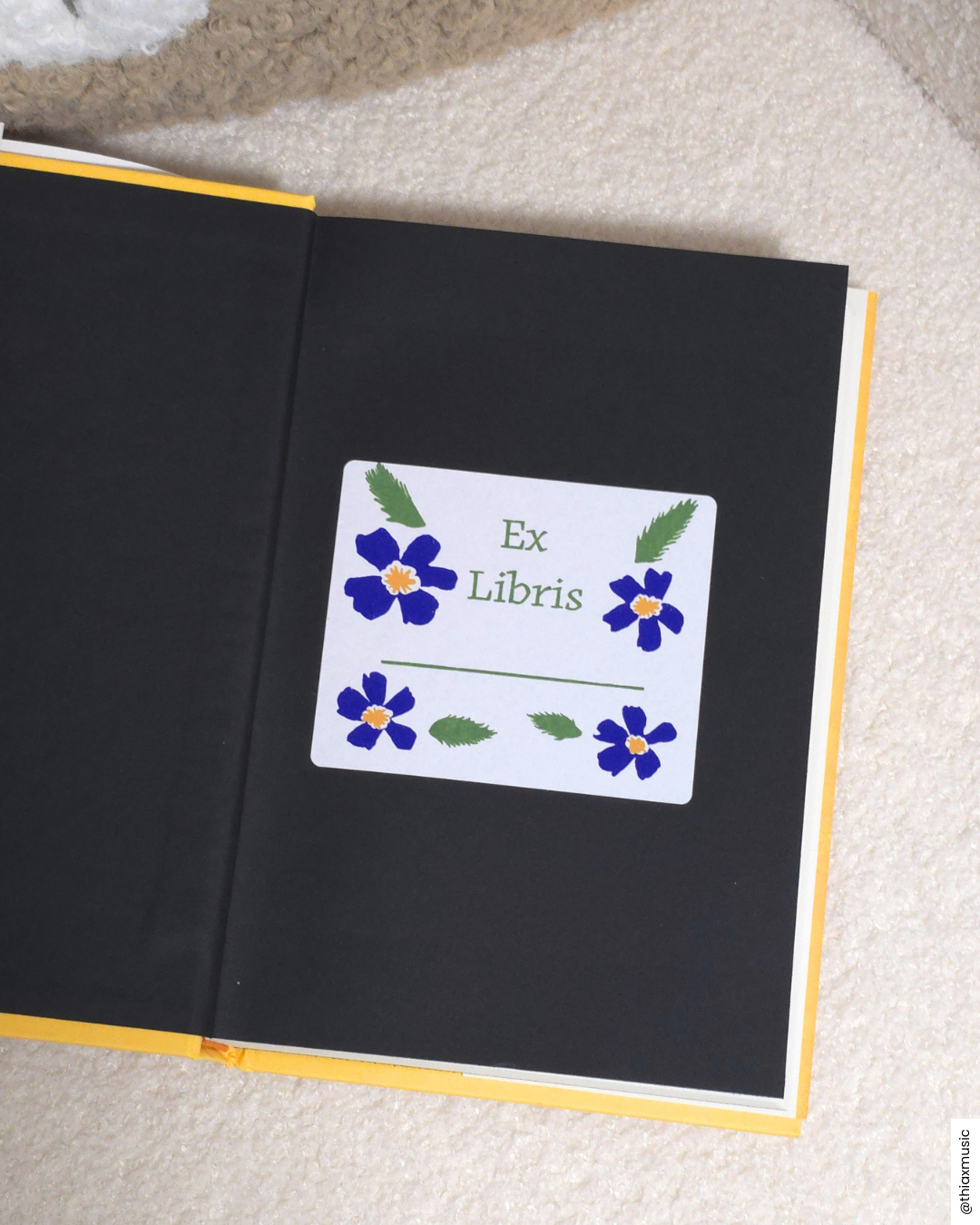
P.S. Enclosed are bookplates I designed, then silkscreened by hand. The flora are all from the prairies where this book takes place.